How Financial Service Providers Can Improve Customer Engagement with AI
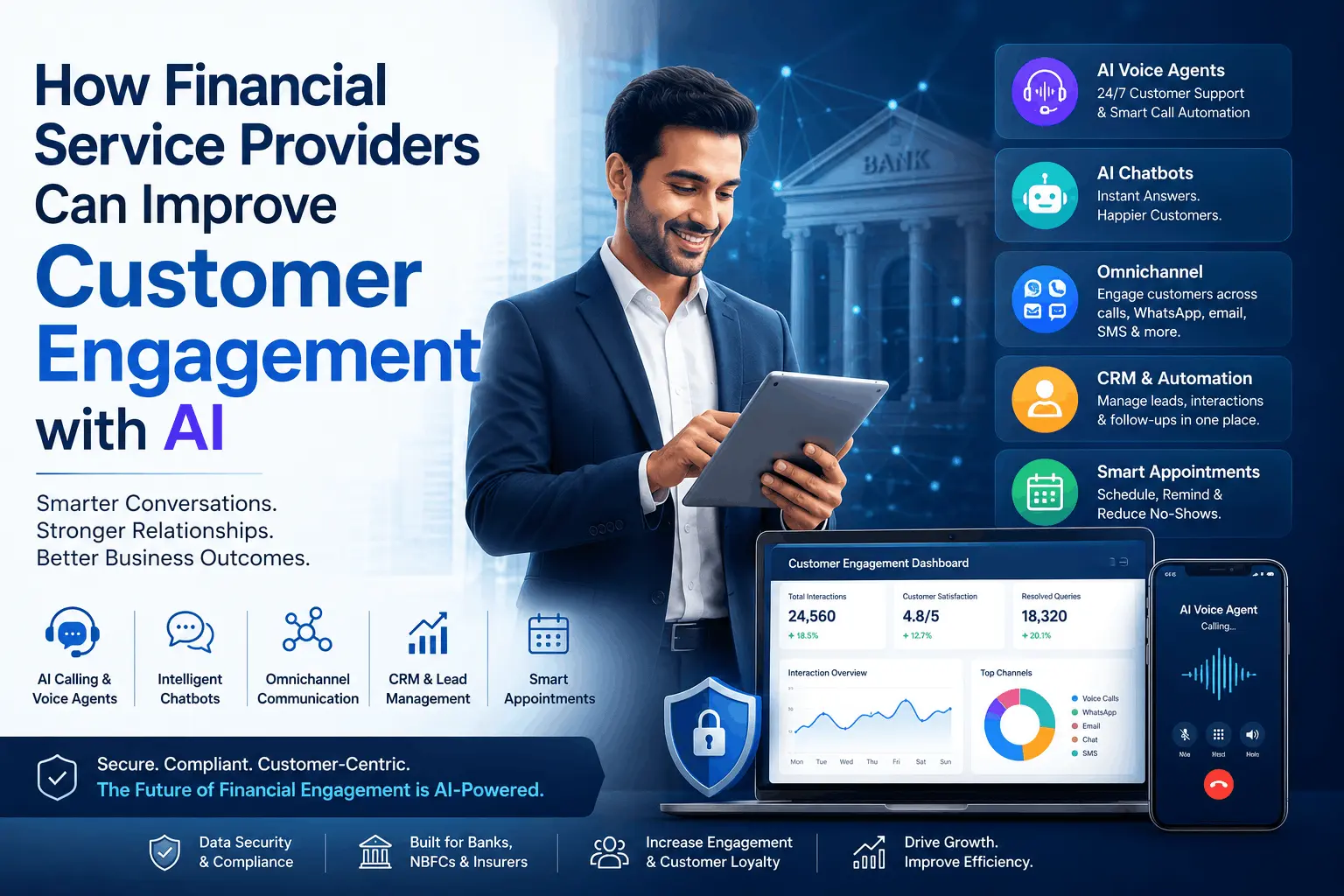
The financial services industry is built on trust, responsiveness, and personalized customer relationships. Whether customers are opening a new account, applying for a loan, purchasing insurance, or seeking investment advice, they expect quick, accurate, and convenient communication.
However, financial institutions face several challenges:
- Large volumes of customer inquiries
- Increasing competition
- Rising customer expectations
- Regulatory compliance
- Manual follow-ups
- Fragmented communication systems
Artificial Intelligence is changing how financial organizations engage with customers by enabling faster service, personalized interactions, and intelligent automation.
Table Of Contents
- Executive Summary (TL; DR)
- Why Customer Engagement Matters in Financial Services
- Common Customer Engagement Challenges
- How AI Improves Customer Engagement
- Benefits of AI for Financial Service Providers
- How Pronnel Supports Financial Service Providers
- Best Practices for Implementing AI in Financial Services
- Future of AI in Financial Services
- FAQ’s
- Conclusion
Executive Summary (TL; DR) :
Customer expectations in the financial services industry have evolved significantly. Clients now expect instant responses, personalized financial advice, seamless digital experiences, and secure communication across multiple channels. Traditional customer service models often struggle to meet these expectations due to high inquiry volumes, manual processes, and limited availability.
Artificial Intelligence (AI) is helping banks, insurance companies, NBFCs, investment firms, and financial advisors transform customer engagement by automating routine interactions, providing personalized experiences, and enabling faster decision-making. From AI-powered voice agents and intelligent chatbots to CRM automation and omnichannel communication, AI allows financial institutions to deliver exceptional customer service while improving operational efficiency.
This article explores how AI is reshaping customer engagement in financial services, the key benefits of AI-driven communication, and how platforms like Pronnel help financial organizations build stronger customer relationships through AI Calling, CRM, and omnichannel engagement.
Customer engagement goes beyond answering questions—it involves building long-term relationships through timely, relevant, and personalized communication.
Strong customer engagement helps financial institutions:
- Increase customer loyalty
- Improve customer retention
- Boost cross-selling and upselling opportunities
- Build trust and credibility
- Increase operational efficiency
- Enhance customer satisfaction
AI enables organizations to achieve these goals while reducing manual effort.
Common Customer Engagement Challenges
Many financial service providers still rely on traditional communication methods, leading to:
1. Slow Response Times
Customers may wait hours or even days for responses to loan applications, policy inquiries, or service requests.
2. Manual Follow-Ups
Sales and support teams often spend valuable time calling customers and sending reminders manually.
3. Disconnected Communication Channels
Customer conversations across calls, emails, WhatsApp, and websites are frequently managed in separate systems.
4. Limited Service Availability
Many organizations only provide support during business hours, reducing customer satisfaction.
How AI Improves Customer Engagement
1. AI-Powered Voice Calling
AI voice agents can answer inbound calls, make outbound calls, verify customer details, schedule appointments, and provide instant information.
Benefits include:
- 24/7 customer support
- Reduced waiting times
- Automated reminders
- Faster loan and policy inquiries
- Improved lead qualification
2. Intelligent Chatbots
AI chatbots provide immediate assistance for common customer questions.
Customers can instantly:
- Check application status
- Request account information
- Schedule appointments
- Receive product information
- Connect with support teams
This improves response times while reducing the workload on customer support teams.
3. Personalized Customer Communication
AI analyzes customer interactions, preferences, and financial history to deliver personalized recommendations.
Examples include:
- Insurance renewal reminders
- Loan eligibility notifications
- Investment opportunities
- Credit card upgrade offers
- Personalized financial guidance
Personalization increases customer engagement and conversion rates.
4. Omnichannel Customer Engagement
Customers communicate through multiple channels, including:
- Voice Calls
- SMS
- Website Chat
- Social Media
AI-powered omnichannel platforms unify these interactions into a single dashboard, ensuring consistent communication and complete customer history.
5. Automated Lead Management
Financial organizations receive leads from websites, referrals, campaigns, and partner networks.
AI helps by:
- Capturing leads automatically
- Scoring lead quality
- Assigning leads to advisors
- Scheduling follow-ups
- Tracking conversion progress
This reduces response times and improves sales productivity.
6. Smart Appointment Scheduling
Customers often need appointments with financial advisors, insurance agents, or relationship managers.
AI simplifies scheduling by:
- Finding available time slots
- Sending confirmations
- Sending reminders
- Managing reschedules automatically
This reduces missed appointments and improves customer convenience.
7. AI-Powered CRM
Modern CRM platforms use AI to organize customer data and automate routine processes.
Key CRM capabilities include:
- Customer profiles
- Communication history
- Lead tracking
- Task automation
- Sales pipeline management
- Customer insights
A centralized CRM helps teams deliver faster and more personalized service.
Benefits of AI for Financial Service Providers
Implementing AI-driven customer engagement offers numerous advantages:
- Faster customer response times
- Increased customer satisfaction
- Lower operational costs
- Improved lead conversion
- Better customer retention
- Enhanced employee productivity
- Scalable customer support
- Data-driven decision-making
These benefits help financial organizations remain competitive in a rapidly evolving digital landscape.
How Pronnel Supports Financial Service Providers
Pronnel provides an AI-powered customer engagement platform designed to simplify communication and improve operational efficiency.
With Pronnel, financial organizations can:
- Automate inbound and outbound calls using AI Calling
- Manage leads through an intelligent CRM
- Engage customers across WhatsApp, email, voice, and social media
- Automate appointment scheduling and follow-ups
- Track customer interactions in one centralized platform
- Improve collaboration between sales and customer support teams
By combining AI Calling, CRM, and omnichannel communication, Pronnel helps financial service providers deliver faster, smarter, and more personalized customer experiences.
Best Practices for Implementing AI in Financial Services
To maximize the value of AI:
- Start with repetitive customer interactions.
- Integrate AI with your CRM.
- Use omnichannel communication.
- Keep human agents available for complex issues.
- Continuously monitor and improve AI performance.
- Ensure compliance with financial regulations and data privacy requirements.
Future of AI in Financial Services
AI is becoming an essential part of digital transformation in the financial sector.
Future innovations will include:
- Advanced voice assistants
- Predictive customer analytics
- Hyper-personalized financial recommendations
- Automated compliance support
- Intelligent fraud detection
- Conversational banking experiences
Financial institutions that embrace AI today will be better equipped to meet evolving customer expectations and stay ahead of the competition.
Frequently Asked Questions About Why Every Real Estate Business Needs a CRM
How is AI used in financial services?
AI helps financial institutions automate customer support, personalize communication, manage leads, schedule appointments, detect fraud, and improve customer engagement.
What are the benefits of AI for customer engagement in financial services?
AI improves response times, provides 24/7 support, automates repetitive tasks, delivers personalized recommendations, and increases customer satisfaction.
Can AI Calling improve customer service in financial institutions?
Yes. AI Calling enables financial organizations to answer customer inquiries, schedule appointments, send reminders, and qualify leads while reducing wait times.
Why is CRM important for financial service providers?
A CRM centralizes customer information, tracks interactions, automates follow-ups, and helps financial teams build stronger customer relationships.
How does Pronnel help financial service providers?
Pronnel combines AI Calling, CRM, omnichannel communication, lead management, and appointment scheduling into one platform, enabling financial organizations to improve customer engagement and operational efficiency.
Conclusion
Artificial Intelligence is revolutionizing customer engagement in financial services by making communication faster, smarter, and more personalized. From AI-powered calling and chatbots to CRM automation and omnichannel engagement, AI enables organizations to deliver exceptional customer experiences while improving efficiency and reducing costs. Pronnel empowers financial service providers with an integrated platform that combines AI Calling, CRM, lead management, appointment scheduling, and omnichannel communication. By leveraging these capabilities, businesses can strengthen customer relationships, improve operational performance, and drive long-term growth in an increasingly competitive market.
Subscribe To Pronnel Blogs
Get the latest updates on AI CRM software, WhatsApp automation, business productivity, customer engagement, and workflow automation directly to your inbox.