Integrating AI Calling Chatbots into Your Omnichannel Strategy
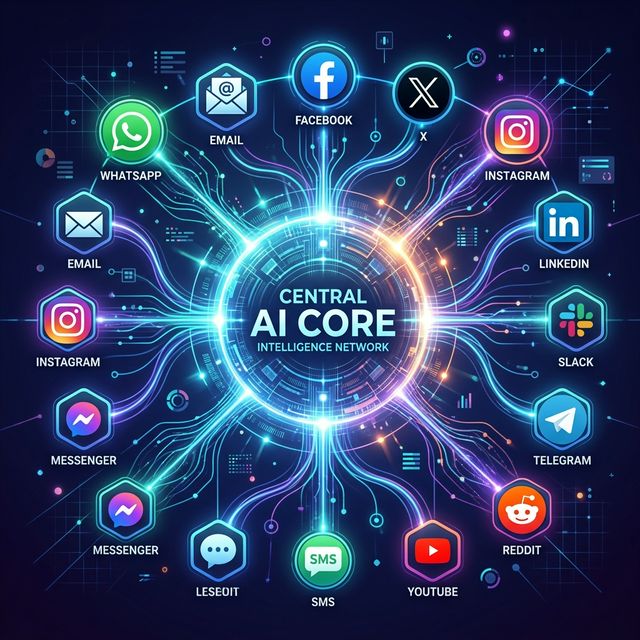
In an era where customers jump seamlessly from social media to WhatsApp, and from email to phone calls, isolated communication silos are the mortal enemy of a great customer experience. While deploying an AI calling chatbot is an excellent way to handle immediate inquiries, its true value explodes only when it is woven directly into a broader omnichannel strategy.
A customer might request a callback via an Instagram DM, confirm an appointment on WhatsApp, and receive the actual phone call seamlessly orchestrated by an AI. How do you tie all these disparate threads together? This guide explores why unified CRM communication is crucial, and how integrating AI voice bots right into the center of your strategy ensures no customer context is ever dropped.
Table Of Contents
- The Omnichannel Advantage
- Siloed Bots vs. Integrated Intelligence
- Preventing Customer Frustration
- Connecting AI Calling with WhatsApp and Email
- The Role of the Unified CRM
- FAQ’s
- Conclusion
The Omnichannel Advantage
Omnichannel goes beyond multi-channel. While a multi-channel approach simply offers various platforms to the consumer, an omnichannel strategy guarantees a consistent, uninterrupted experience regardless of the channel. When applied to AI calling chatbots, this ensures an intelligent voice agent knows exactly what a prospect tweeted about or emailed an hour ago.
Instead of hitting a reset button every time the customer switches their medium of communication, an omnichannel AI effectively picks up the conversation directly where it was left off on the previous channel.
Siloed Bots vs. Integrated Intelligence
Many businesses deploy "siloed" voice bots. These bots call leads from a static list but possess no awareness of the prospect's real-time activities across other platforms. This leads to frustrating interactions. If a customer sent an email canceling their subscription, but the isolated voice bot calls them to upsell a feature 10 minutes later, the disjointed brand experience is jarring.
In contrast, an integrated AI voice bot analyzes context from a centralized CRM before making the call. It verifies recent tickets, checks the latest WhatsApp communications, and adjusts its script accordingly, presenting a deeply informed and intelligent front to the consumer.
Preventing Customer Frustration
Nothing alienates an engaged customer more quickly than being asked to repeat themselves. "As I just stated in my email..." is a phrase customer support and sales managers dread hearing. Omnichannel integration effectively eradicates this friction point.
Because the AI caller has instantaneous access to the customer's entire historical footprint—from the webpages they've browsed to the live-chats they've engaged in—it can tailor the greeting. For example, "Hello Mark, I'm following up on the billing query you submitted via our website chatbot this morning." This personalized urgency creates immediate trust.
Connecting AI Calling with WhatsApp and Email
Consider this workflow: An AI bot calls a customer about a delayed shipment (Voice). The customer does not answer. The AI intelligently dictates a swift follow-up text summarizing the call intent via the WhatsApp Business API (Text). The customer responds on WhatsApp indicating they prefer email details, and the CRM automatically fires a full PDF summary to their inbox (Email).
This synergy ensures higher engagement rates, as you meet the customer where they are most comfortable, without tedious manual follow-ups by your team. You can establish specific rule sets (e.g., if Voice = No Answer, Trigger = WhatsApp Template C) to create a relentless, yet polite omnichannel pipeline.
🚀 Integration Tip: Always trigger cross-channel messages transparently. Use platforms that allow AI bots to send SMS or WhatsApp templates natively if a voice call drops, goes to voicemail, or concludes with an action item that requires a physical link.
The Role of the Unified CRM
An omnichannel AI experience is impossible without a highly capable, unified CRM like Pronnel. The CRM serves as the "central brain," storing the master customer record. Whenever the AI calling bot interacts with a contact, it reads the CRM's latest data to formulate the dialogue and writes back real-time transcripts, metadata, and sentiment analysis once the call concludes.
Pronnel offers precise integration points that allow these logic engines to easily read multi-platform history, making every AI call feel personal, accurate, and deeply contextual. This data is then instantly available for your human agents, reporting dashboards, and marketing automation campaigns.
Frequently Asked Questions About Frequently Asked Questions
How does an AI bot know about a customer's previous WhatsApp messages?
By utilizing a unified CRM like Pronnel, the AI caller fetches the consolidated interaction history via API right before the call starts, allowing it to reference previous text conversations, tickets, and emails.
Is it expensive to set up an omnichannel AI calling strategy?
While enterprise contact center setups were historically expensive, modern unified CRMs and cloud-based AI voice APIs have made omnichannel integrations highly accessible, easy to deploy, and cost-effective for rapidly growing businesses.
What happens if a customer wants to speak to a real human during the AI call?
The system handles this gracefully. The AI bot can be programmed with intent-recognition for phrases like "Speak to an agent" or "Human please." It will seamlessly employ a warm transfer to route the active call—along with the AI’s collected context—to the next available human representative.
How does an omnichannel strategy improve ROI?
By reaching out to prospects on the channels they actively use and dynamically switching mediums (e.g., from an ignored call to a read WhatsApp message), businesses capture leads that would otherwise go dark, increasing the total conversion rate drastically.
Can AI callers trigger follow-up actions like sending an email?
Absolutely. During the conversation, if a prospect requests information, the AI caller can ping an endpoint on your CRM to instantly trigger a templated email or SMS containing the relevant brochures, contracts, or links before the call even ends.
Is omnichannel AI calling compliant with data privacy laws?
Yes, provided the centralized CRM used to power the omnichannel experience adheres to data privacy standards (such as GDPR or SOC2). The AI relies entirely on the permitted data structure established within your protected CRM environment.
Conclusion
As consumer patience wears thin, providing a fragmented customer experience is a risk no business can afford. AI calling chatbots are incredibly powerful on their own, but they achieve maximum utility when integrated deeply into an omnichannel environment. Synchronize your voice bots with your CRM, WhatsApp, and email platforms, and empower your artificial intelligence to deliver truly continuous and intelligent customer journeys.
Subscribe To Pronnel Blogs
Get the latest updates on AI CRM software, WhatsApp automation, business productivity, customer engagement, and workflow automation directly to your inbox.