Why Every Real Estate Business Needs a CRM: The Complete Guide to Managing Leads, Properties, and Client Relationships
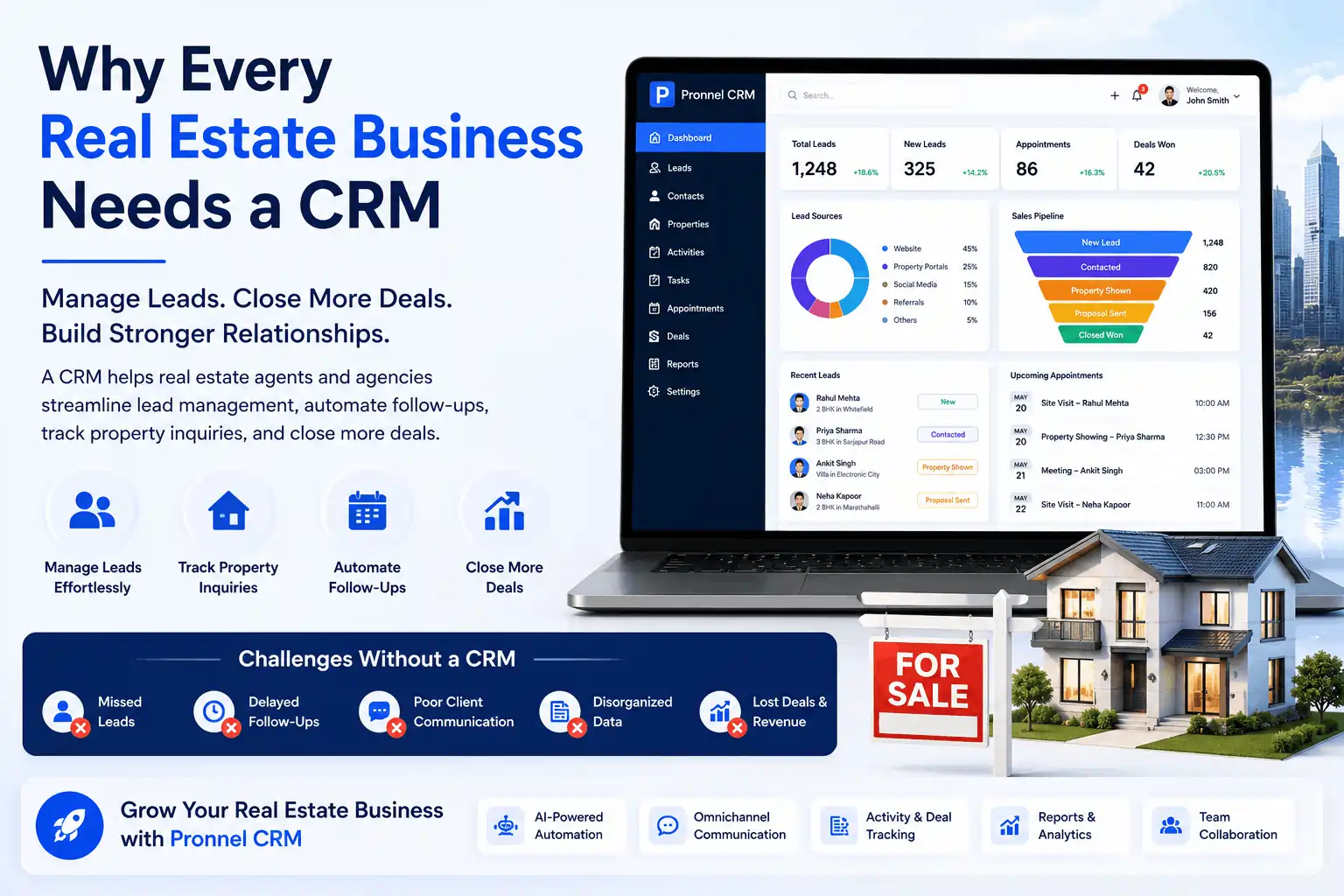
The real estate industry has become more competitive than ever. Buyers and sellers expect instant responses, personalized communication, virtual property tours, and seamless experiences throughout their property journey. At the same time, real estate agencies are handling hundreds of inquiries from websites, property portals, social media platforms, WhatsApp, and phone calls.
Yet many real estate businesses still manage leads using spreadsheets, sticky notes, WhatsApp chats, and disconnected software tools. This fragmented approach often results in missed opportunities, delayed follow-ups, poor customer experiences, and lost commissions.
In today's fast-moving property market, success depends on how effectively you capture, track, nurture, and convert leads into clients.
In this comprehensive guide, we'll explore why every real estate business needs a CRM, the biggest challenges agents face without one, and how modern CRM software helps agencies increase conversions, improve productivity, and close more deals.
Table Of Contents
- Executive Summary (TL; DR)
- Why Traditional Lead Management Fails in Real Estate
- What Is a Real Estate CRM?
- 10 Reasons Every Real Estate Business Needs a CRM
- How Pronnel Helps Real Estate Businesses Grow
- 5 Best Practices for CRM Success in Real Estate
- FAQ’s
- Conclusion
Executive Summary (TL; DR) :
Real estate businesses generate leads from multiple channels including property portals, websites, social media campaigns, referrals, and walk-in inquiries. Without a centralized system, managing these opportunities becomes increasingly difficult as the business grows.
This guide explores how a Real Estate CRM helps agencies streamline lead management, automate follow-ups, improve client communication, manage property inquiries, and increase sales efficiency.
🚀 Real Estate Growth Accelerator: Stop losing property inquiries due to missed follow-ups and disconnected communication channels. Centralize your leads, client interactions, property management, and sales activities using Pronnel's AI-powered CRM workspace.Free Omnichannel Lead Management Workspace via Pronnel.
We'll examine the 10 most important reasons why successful real estate businesses invest in CRM software and how automation can help agents focus more on closing deals and less on administrative work.
Why Traditional Lead Management Fails in Real Estate
When a real estate business is small, managing inquiries through spreadsheets and messaging apps may seem manageable. However, as lead volumes increase, these manual methods quickly become inefficient.
Missed Property Inquiries
A potential buyer submits an inquiry through your website, another messages you on WhatsApp, while several more come from property listing portals.
Without centralized tracking, some inquiries inevitably get missed.
Delayed Follow-Ups
Property buyers often contact multiple agencies before making a decision. Delayed responses can cause prospects to choose competitors.
Disorganized Client Communication
Agents frequently communicate through calls, emails, WhatsApp messages, and social media platforms.
Without proper tracking, important conversations become difficult to find.
Poor Lead Visibility
Managers struggle to answer questions like:
- Which agent is handling a lead?
- Which properties generate the most inquiries?
- How many deals are close to closing?
- Where are prospects dropping off?
Without clear visibility, business growth becomes difficult to manage.
What Is a Real Estate CRM?
A Real Estate CRM (Customer Relationship Management) system is software designed to help agencies manage leads, clients, properties, communications, appointments, and sales activities from a centralized platform.
Instead of relying on spreadsheets and manual processes, a CRM allows agents to:
- Automate follow-ups
- Capture leads automatically
- Track buyer and seller interactions
- Schedule follow-ups
- Manage property inquiries
- Monitor deal progress
- Generate sales reports
- Improve customer experiences
Modern CRM platforms also leverage automation and artificial intelligence to streamline repetitive tasks and improve conversion rates.
10 Reasons Every Real Estate Business Needs a CRM
1. Centralized Lead Management
Real estate leads come from multiple sources.
Managing them across different tools creates confusion and inefficiencies.
The Solution: A CRM centralizes all leads into one dashboard, ensuring every inquiry receives attention.
2. Faster Response Times
Property buyers often contact several agents simultaneously.
The first agency to respond frequently has the highest chance of winning the business.
The Solution: Automated lead notifications help agents respond instantly.
3. Better Follow-Up Management
Many real estate deals require weeks or months of nurturing before closing.
Without proper reminders, agents can easily forget important follow-ups.
The Solution: Automated tasks and reminders ensure prospects never fall through the cracks.
4. Improved Client Communication
Buyers and sellers expect personalized communication throughout their journey.
The Solution: A CRM stores complete communication histories, allowing agents to deliver better service.
5. Efficient Property Inquiry Tracking
Understanding which properties generate the most interest helps agencies optimize marketing efforts.
The Solution: CRM systems track inquiries, visits, and engagement for each property listing.
6. Enhanced Team Collaboration
As agencies grow, multiple agents may interact with the same client.
Without proper systems, communication gaps emerge.
The Solution: Shared customer records improve collaboration and accountability.
7. Automated Workflow Management
Administrative tasks consume significant time.
The Solution: CRM automation handles lead assignment, task creation, reminders, and status updates automatically.
8. Better Sales Pipeline Visibility
Managers need real-time visibility into ongoing opportunities.
The Solution: CRM dashboards provide clear insights into lead stages, appointments, negotiations, and closed deals.
9. Increased Conversion Rates
When inquiries are tracked properly and follow-ups happen consistently, conversion rates improve significantly.
The Solution: Structured lead nurturing processes help move prospects toward purchase decisions.
10. Scalable Business Growth
Manual systems become unsustainable as agencies expand.
The Solution: CRM software provides the infrastructure needed to support growth without increasing operational complexity.
How Pronnel Helps Real Estate Businesses Grow
Successful real estate businesses need more than a simple contact database. They need a complete operational platform that helps manage customer relationships, property inquiries, team collaboration, and sales processes.
Pronnel provides an integrated workspace that enables agencies to:
Lead Management
Capture and organize leads from websites, property portals, social media campaigns, referrals, and direct inquiries.
Contact Management
Maintain complete customer profiles with communication history and preferences.
Activity Tracking
Monitor calls, meetings, site visits, emails, and follow-up activities.
Omnichannel Communication
Manage WhatsApp, email, phone calls, and customer conversations from one platform.
Task Management
Ensure every lead receives timely follow-ups and attention.
Reporting & Analytics
Track agent performance, lead conversion rates, and property inquiry trends.
Team Collaboration
Improve coordination between sales teams, managers, and support staff.
By centralizing operations within a single platform, real estate businesses can improve efficiency, deliver better customer experiences, and increase revenue.
5 Best Practices for CRM Success in Real Estate
1. Capture Every Lead Automatically
Ensure inquiries from all channels flow directly into your CRM.
2. Respond Quickly
Reduce speed-to-lead times to maximize conversion opportunities.
3. Standardize Follow-Up Processes
Create consistent nurturing workflows for all prospects.
4. Track Key Metrics
Monitor lead sources, conversion rates, appointments, and closed deals.
5. Continuously Improve Workflows
Regularly review processes and optimize based on performance data.
Frequently Asked Questions About Why Every Real Estate Business Needs a CRM
What is a Real Estate CRM?
A Real Estate CRM is customer relationship management software designed to help real estate businesses manage leads, property inquiries, client communications, appointments, and sales activities from a centralized platform.
Why do real estate businesses need a CRM?
Real estate businesses need a CRM to organize leads, automate follow-ups, track customer interactions, improve team collaboration, and ensure no property inquiry is missed. A CRM helps agents close deals faster and improve customer experiences.
How does a CRM help manage real estate leads?
A CRM automatically captures leads from websites, property portals, social media, referrals, and other channels. It centralizes lead information, assigns leads to agents, tracks interactions, and ensures timely follow-ups.
Can a CRM improve property sales conversion rates?
Yes. By automating lead tracking, follow-up reminders, and customer communication, a CRM helps agents engage prospects more effectively, resulting in higher conversion rates and increased property sales.
What features should a Real Estate CRM include?
A Real Estate CRM should include lead management, contact management, property inquiry tracking, activity tracking, task automation, appointment scheduling, communication history, reporting, analytics, and team collaboration features.
How does CRM software improve customer relationships in real estate?
CRM software stores complete customer histories, preferences, property interests, and communication records, allowing agents to provide personalized service and build stronger relationships with buyers and sellers.
How can Pronnel help real estate businesses grow?
Pronnel helps real estate businesses manage leads, track property inquiries, automate follow-ups, monitor sales activities, improve team collaboration, and centralize customer communications through a unified CRM platform designed for business growth.
Conclusion
The modern real estate industry demands speed, organization, and exceptional customer experiences. Agencies that continue relying on spreadsheets and disconnected communication channels risk losing valuable opportunities to more organized competitors.
A Real Estate CRM provides the foundation needed to manage inquiries efficiently, automate follow-ups, improve team collaboration, and deliver better client experiences. By centralizing customer relationships, property inquiries, communication histories, and sales activities, businesses can increase productivity, improve conversion rates, and scale operations more effectively. If your goal is to generate more property sales, improve customer satisfaction, and streamline operations, investing in a modern CRM platform like Pronnel is one of the smartest decisions your real estate business can make.
Subscribe To Pronnel Blogs
Get the latest updates on AI CRM software, WhatsApp automation, business productivity, customer engagement, and workflow automation directly to your inbox.